01 / The brief
Show a cell changing identity.
Isomer proposes, simulates and ranks the factor sets that reprogram cells, for example a skin cell into a neuron or a heart muscle cell. This happens at microscopic scale, so the site shows the change visually first and explains it second.
- 01Show the cells on the first screen.
- 02Explain the science for a non-specialist audience.
- 03A precise, technical visual style.
- 04One next step: enroll for early access.
02 / Positioning
Positioning built on ranked factor sets.
The positioning is built on one product claim: Isomer ranks the factor sets for a target cell type, so the lab only tests the strongest ones. The headline states the idea behind it: “Same genome. Better instructions.”
Audience
Research teams that need a specific human cell type.
Promise
The factors that make that cell type, ranked before any bench work.
Proof
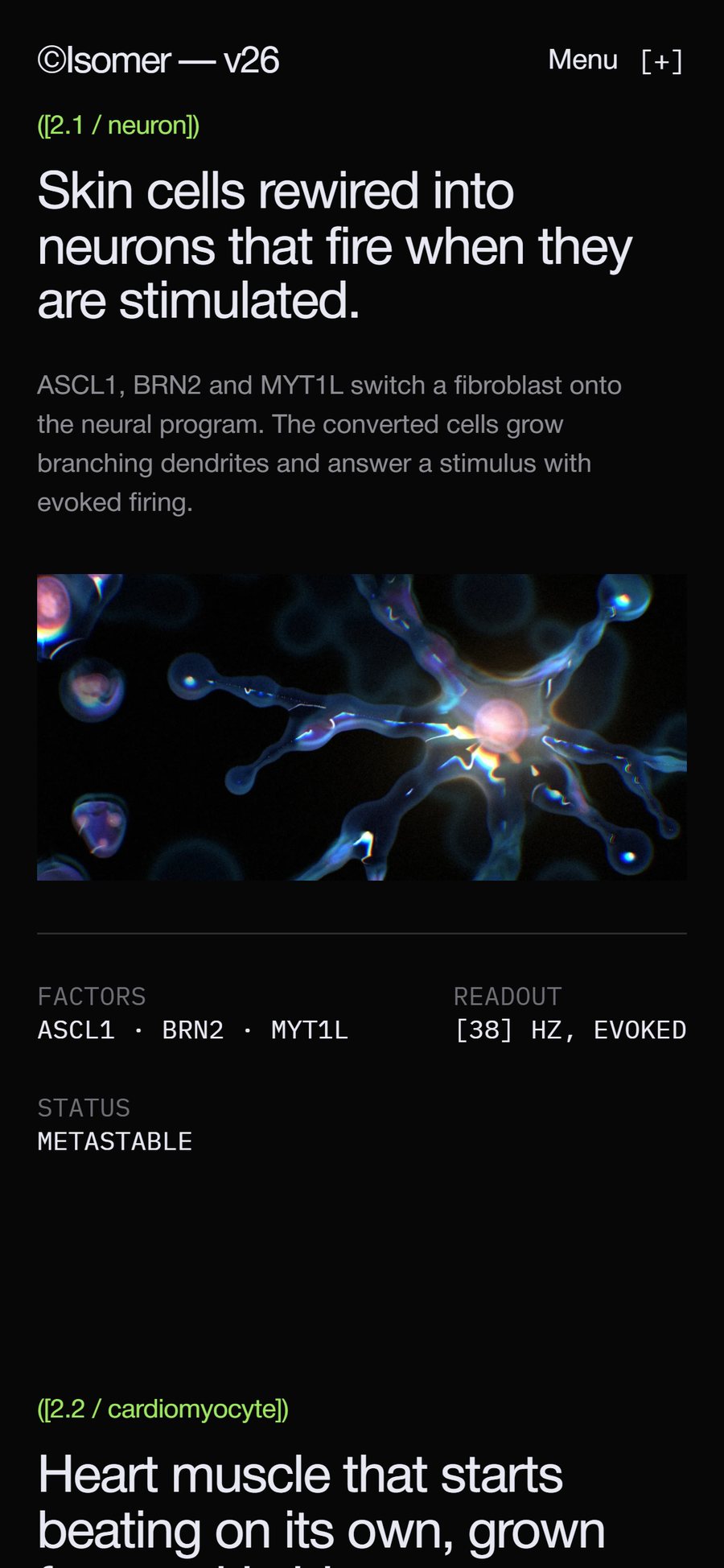
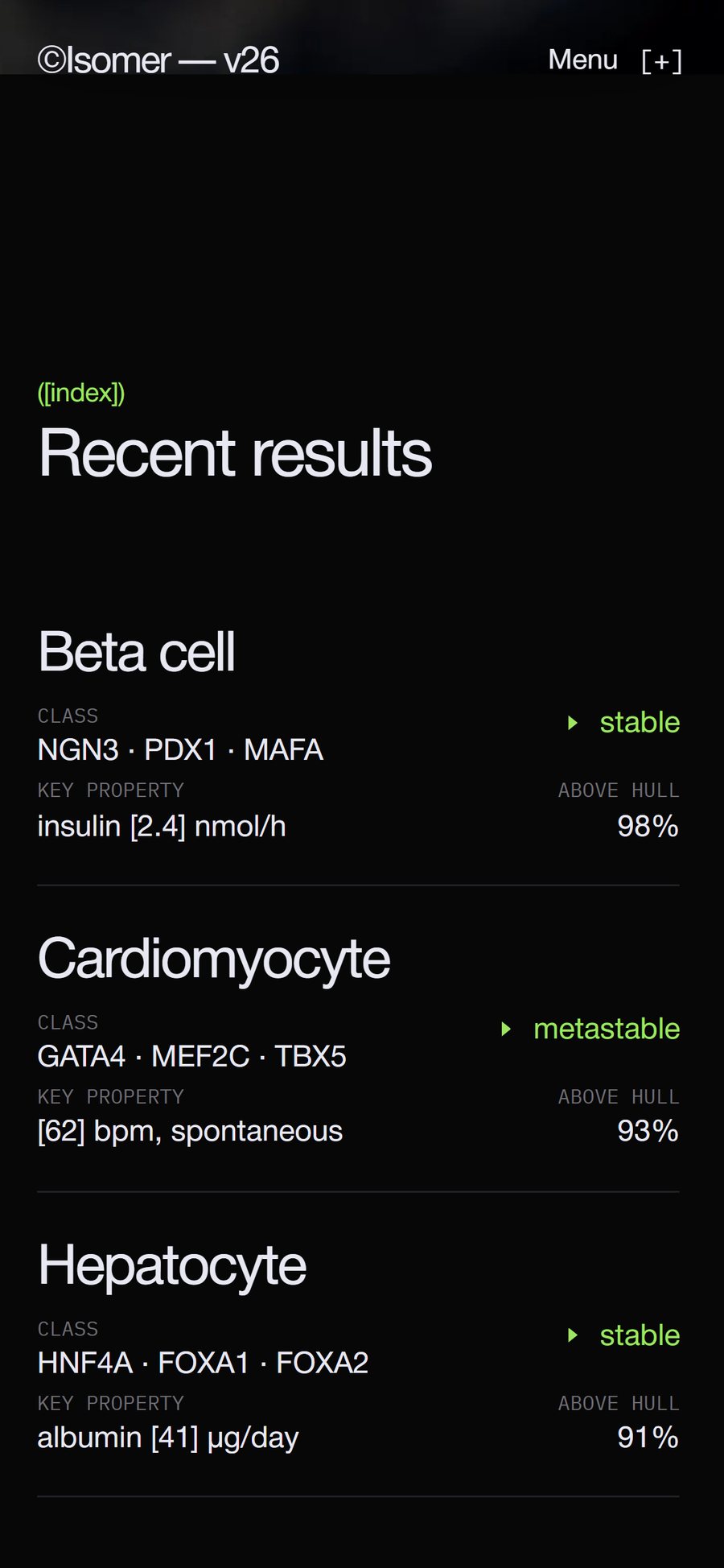
Three cell types with their factors and readouts, and a results table with a score for each set.
Action
Enroll for early access with an email address.
03 / Moodboard
References: glass cells and lab readouts.
Glassy, iridescent cells, microscopy textures and glowing networks, paired with strict editorial layouts and technical labels.
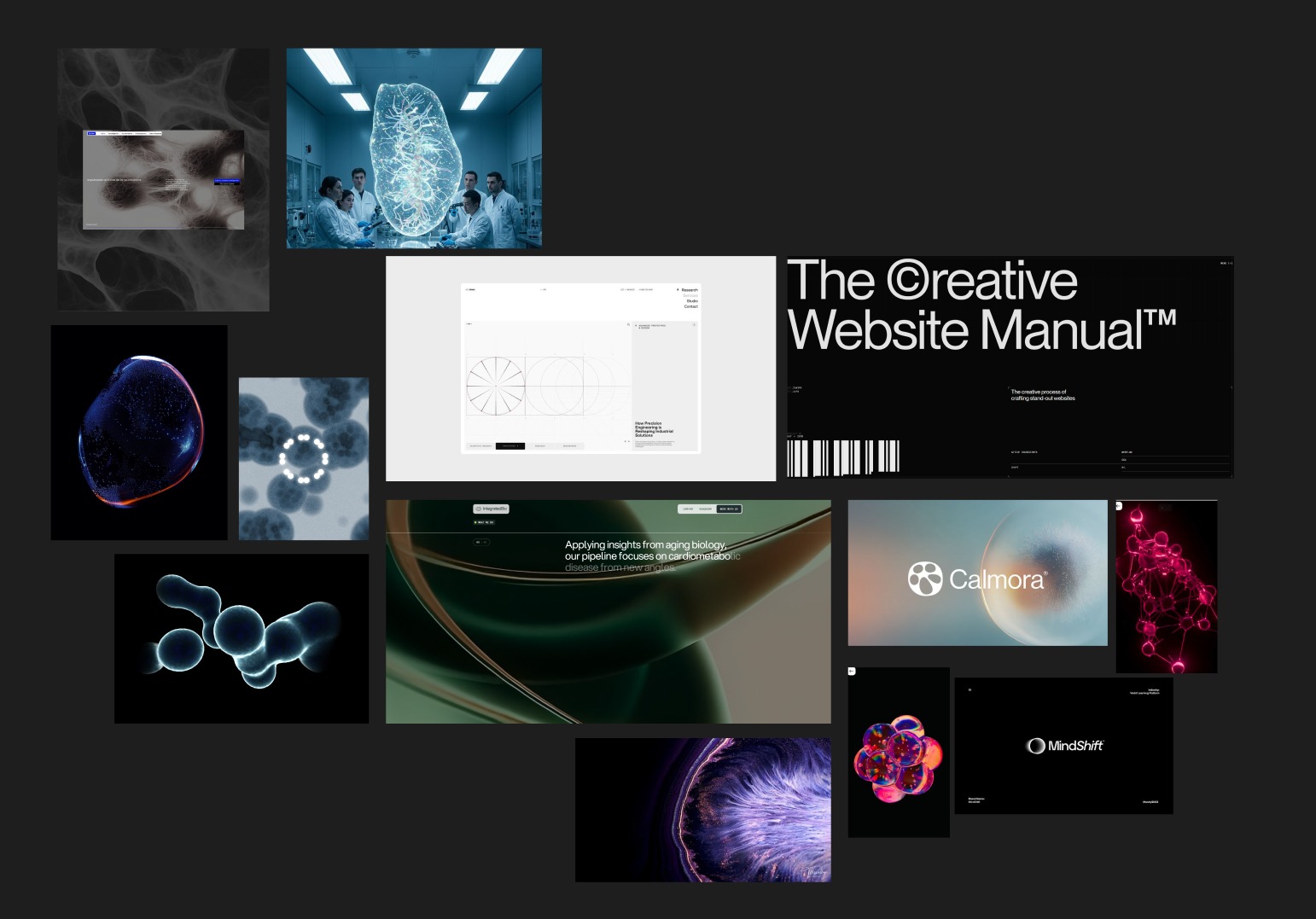
Glass cells
Translucent cells with coloured rims and an inner glow.
Lab readouts
Mono labels, coordinates and stats around each image, as on a microscope display.
Editorial scale
Large Helvetica headlines on black with generous spacing.
04 / Visual language
Cells built in TouchDesigner.
I connected TouchDesigner to an AI agent over MCP. My first direction was a molecular, atomic look: ball-and-stick networks in pink and green.
I then changed direction to cells. Isomer works at the level of the cell: it ranks the factor sets that turn one cell type into another, and the hero shows single cells joining into heart tissue. Cells fit that story better than molecules, so I built several cell variants: liquid bubbles, iridescent glass cells, a neuron, a cluster and a merged cell. The iridescent glass cells became the style of the site.
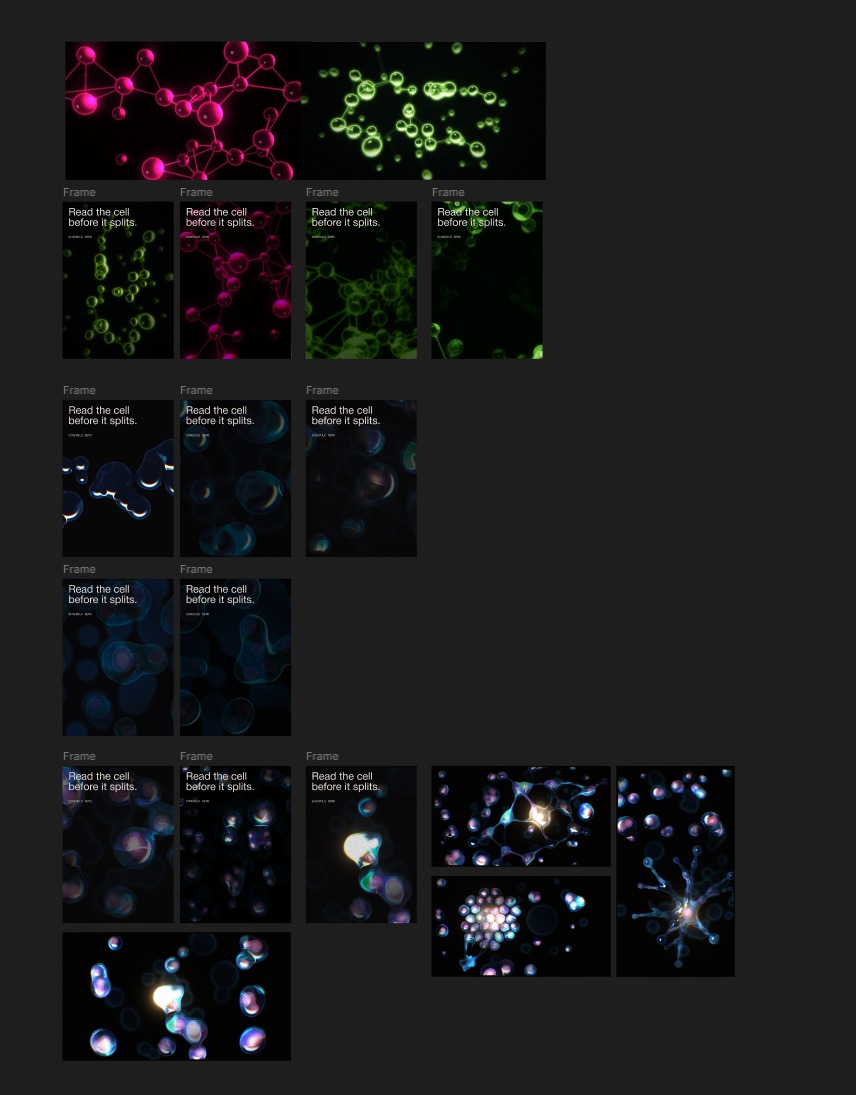
01 Molecules
The first direction: ball-and-stick networks with an atomic look.
02 Cells
Several cell variants, then tuned the glass, glow and motion of the selected one.
03 Apply
Liquid glass cells, dark and iridescent, used across every section.
#070708 Graphite
#2D2D2F Dim
#6E6D73 Muted
#8E8D93 Fog
#E8E8F2 Signal
#9EE561
Aa
Helvetica Neue, headlines and body
IBM PLEX MONO, LABELS AND READOUTS
- DisplaySame genome.Helvetica Neue 104px
- TitleSame genome.Helvetica Neue 56px
- StatementSame genome.Helvetica Neue 54px
- LedeSame genome.Helvetica Neue 43px
- BodySame genome.Helvetica Neue 14px
- LabelSame genome.IBM Plex Mono 14px
- TagSame genome.Helvetica Neue 14px
05 / The hero
A three-step scroll sequence.
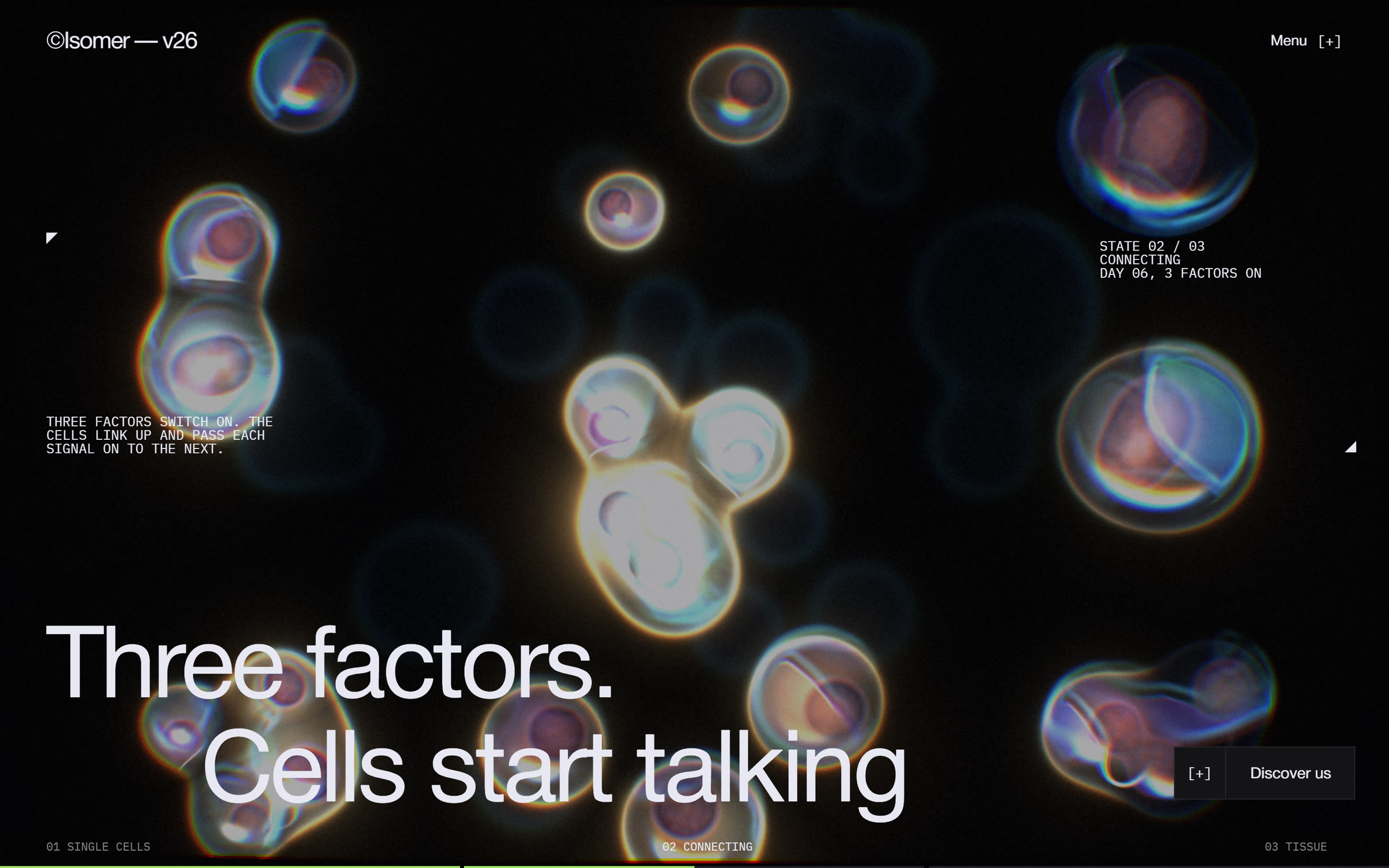
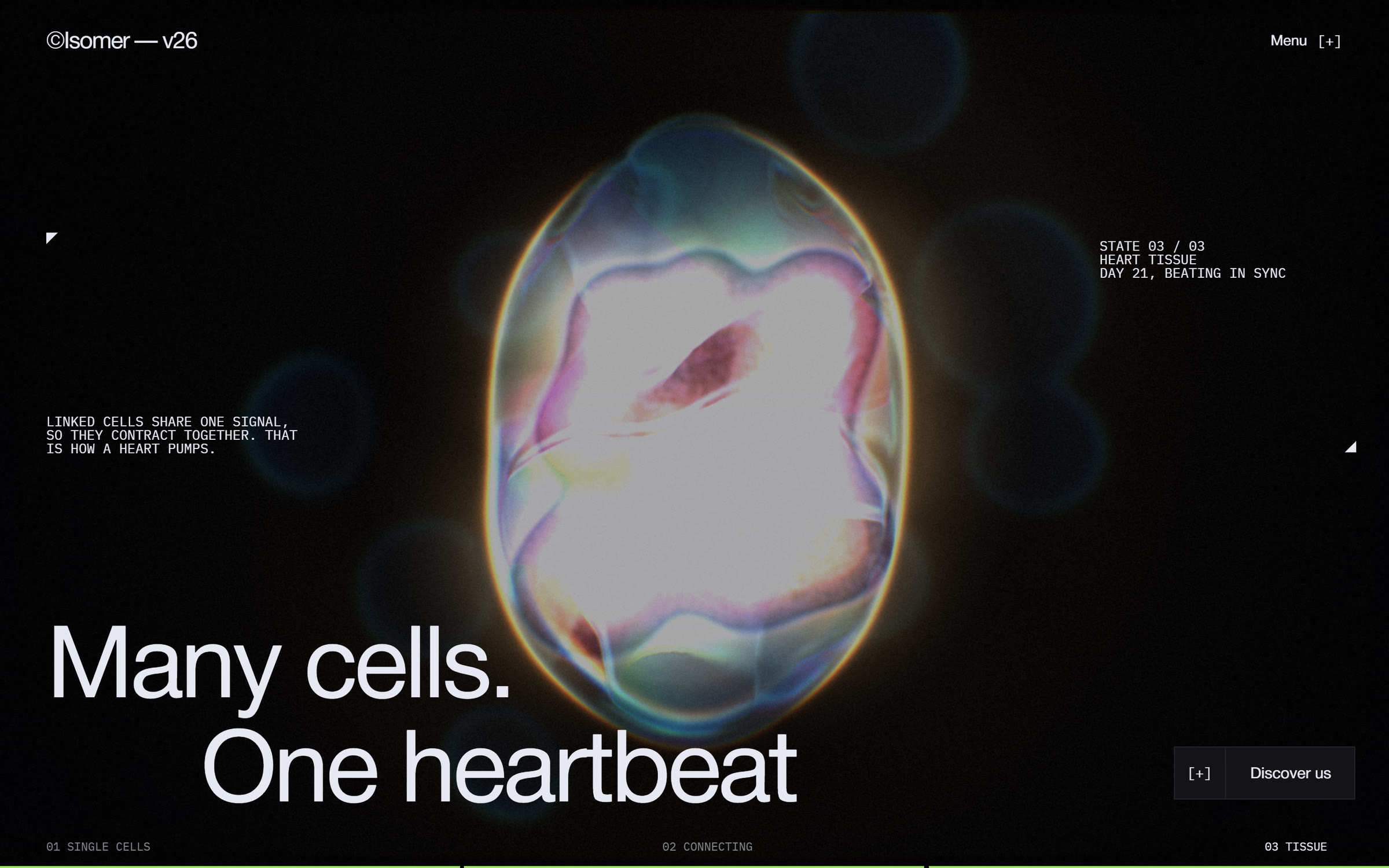
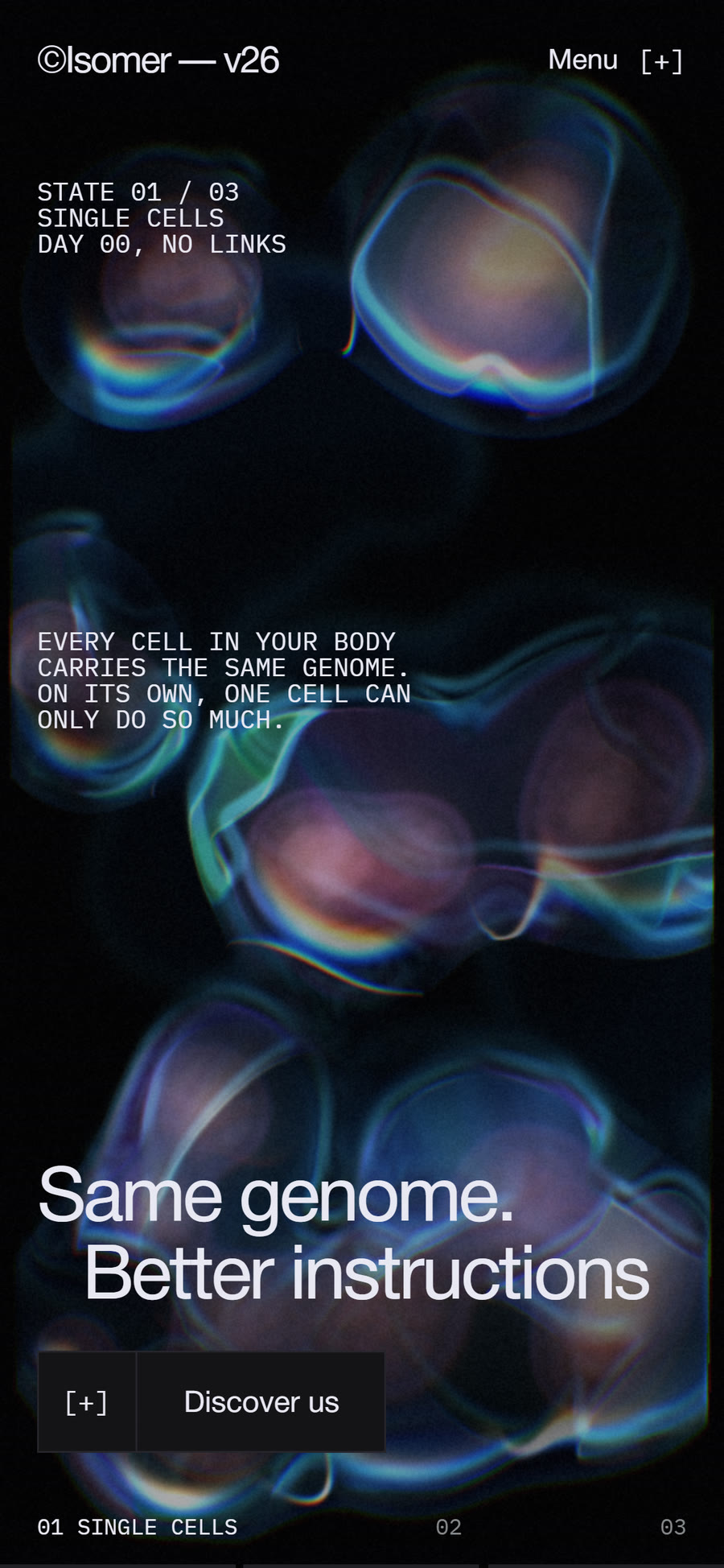
The hero is a scroll sequence in three states. The cells start apart, link up once three factors switch on, and end as one tissue that beats in sync. The copy follows the same order and describes what the cells gain by connecting: linked heart cells share one signal and contract together.
Each state changes the headline, the state label and the side note. Headlines rise in line by line, and the note is written in from the letters A, C, G and T. Every headline is two short lines, so it fits a 390 px phone screen without wrapping.
- 01Single cells, day 00: “Same genome. Better instructions.”
- 02Connecting, day 06: “Three factors. Cells start talking.”
- 03Heart tissue, day 21: “Many cells. One heartbeat.”
06 / Build
Device-adaptive WebGL.
Built in plain HTML, CSS and JavaScript. The WebGL hero is the heaviest part of the page, so it measures the device it runs on and adjusts.
- Adaptive quality: on load, the engine times its own GPU work and lowers resolution or frame rate on slower machines to keep playback smooth.
- Phones: the cells play full screen with the headline, button and state tabs on top. A dark layer over the animation keeps the text legible.
07 / What shipped
Site, hero, visuals, system and copy.
- SiteResponsive one-page site, built in code.
- HeroReal-time WebGL cell story, ported from TouchDesigner.
- VisualsCell renders for neurons, heart and liver.
- SystemType, colour, labels and interaction details.
- ContentCopywriting for every section.